
Thomas Edison (or his students, one really never knows with him) worked on the carbon microphone in 1876. Since then, microphone technology has come a heck of a long way, from liquid microphones that rendered speech so you could actually understand it (early mics couldn’t render speech intelligibly), to condenser mics used for studio recordings and scientific recordings.
We’ve also got digital mics, silicon mics on a chip, parabolic microphones for spies and eavesdroppers, ribbon microphones, laser mics, electret condenser microphones, lavalier microphones that clip onto clothing for interviews and even speakers are sometimes used for mics in intercoms and walkie talkies (and by creative sound engineers ). We’ve come a long way.
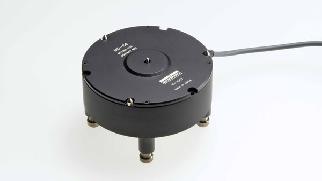
Throat microphones are used to pick up voice in environments with lot of ambient noise and are a type of contact microphone. Some contact mics are used to pick up the sound from acoustic instruments (piezo mics), but a company in Japan called Sanken have a moving-coil contact microphone called the MO-64 that is sensitive enough to pick up the footsteps on an ant, or amazingly the heartbeat of a snail (which, by the way is about 10-40 bpm.
(example of 2 contact mics on an anthill)
 This mic, which was developed a few years ago but hasn’t been available commercially until recently, isn’t the only high-sensitivity mic out there, but the great thing about this microphone is that it uses a tiny pin to detect vibration on a surface, therefore sound in the air is not picked up by the microphone. This allows very faint sounds to be amplified a great deal with little ambient noise.
 Of course this little microphone may not necessarily be the absolute most sensitive microphone in the world – that prize arguably goes to these huge concrete behemouths .
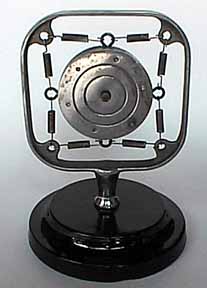
Sanken also make an interesting new microphone that they describe a a perfect omni-directional condenser microphone, claimed to be the first microphone that displays a perfectly circular polar pattern at up to 20kHz. Presumably this type of mic would be of great interest to engineers who record orchestral music
How much is it going to set you back to buy a mic that you can practically use to record yourself thinking? Around $4000.
 While at that price they aren’t going to be flying off the shelves, it’s still a lot less than other professional quality setups like the “Neumann Solution D Large Diaphragm Studio Microphone with 96kHz A/D Converter” which will set you back a cool $13,200.
this one. There is also a portable version of the microphone.
A rock star insect singing into a mic? (right)
The mic is really cool, but I’d like to point out one thing: I tried to contact Sanken to find out more about the microphone and its applications, however my polite inquiries were treated with a bit of a rude refusal to answer any questions. In fact, they refused to even confirm that the video above actually uses their mics. I cannot fathom how this approach to inquiries leads to success in business, but heck, what do I know?

Hi,this will be a new one for you ……looking for a mic for picking up the sound of the darts hitting the darts board,like on tv ……i have an amp and speakers near by if thats any use to you. thanks ann
Hi,
I am Ron Goldman CEO of Hever Group in Israel.
One of our main services is recording and transcribing of boards usually 15-20 participants.
We have our technician who comes to the site ,spreads about 10-12 microphones and records the participants through desk microphones and a mixer.
Than this one track sound is sent to our transcriptionist for typing.
I am looking for a system in which we will be able to record each participant on a separate sound track. We will not be able to “connect”
each member to a microphone(dash) since it will raise an objection. It’s too clumsy!
Do you have any ideas how I can get each one on a different track. A push button microphone is not a solution since things are getting “hot”
During these meetings and nobody will push a button before speaking.
I’d love to hear your ideas,
Best regards,
Ron Goldman
“standard piezo transducers” – ie the brass/ceramic discs a couple of cm (an inch) across
originally made as beepers for the early digital watches – available from most electronic component suppliers.
The contact mics used in the ants video above cost about 50 cents a piece, just your standard piezo transducers. I know I made them. Wouldn’t mind toying around with those Sankens though (if they allow mere humans to touch them).
how sensitive is the contact mic? what are its dimensions? what products is it used in?
thanks